

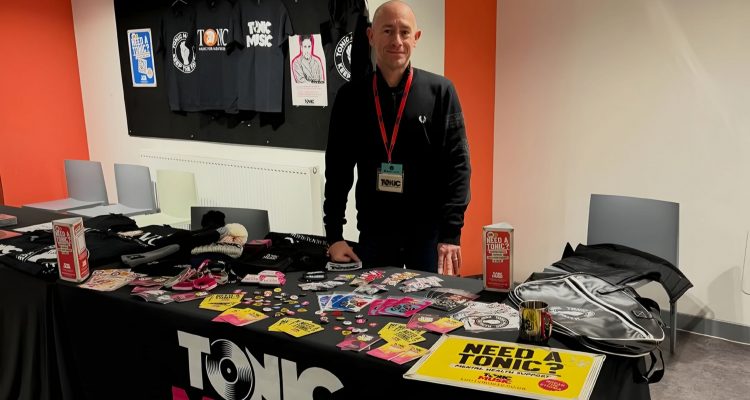
We spoke to Jeordie Shenton about Tonic Music, a registered charity, specialising in mental health support for music industry professionals including DJs, read on to find out more about this vital service..

1. For readers who might be discovering Tonic Music for the first time, how would you describe your mission and the work you lead within music communities?
Tonic Music is a registered charity aiming to establish good mental health within music communities. We provide tailored mental health support to people who professionally engage in music (musicians, singers, DJs, producers, roadies, agents, managers, festival organisers, venue operators) and to those who engage recreationally (music fans and hobbyist musicians, singers, DJs and producers).
We offer online programmes including therapy sessions, peer groups, skills workshops and training courses. All services are free at the point of access and delivered in-house by qualified mental health practitioners with experience in the music world. Over the past five years, more than 1,500 people have received direct support through Tonic Music.
2. The music world can be unpredictable, with long nights, touring pressures and financial uncertainty. What mental health challenges do you see most often among artists, crew and others across the industry?
People working in music face many mental health challenges. These come from the nature of the work and from personal stressors that are often intensified by career pressures. Music is unique because, for many, it is not only a job but an identity.
Stressors such as performance anxiety, creative blocks, physical injury, irregular income, lack of recognition and negative feedback can have a strong emotional effect. Few occupations are so closely tied to personal identity. For this reason, our support does not use an income-based eligibility criterion. We define a music professional by identity rather than earnings.
3. Tonic Rider offers training, peer groups and workshops tailored to people working in music. Which parts of the programme have had the biggest impact so far?
Tonic Rider began nearly five years ago with our first online Peer Support Group facilitated by Dr Adam Ficek and Jade Hughes. Since then, the programme has expanded to include themed peer groups (neurodiversity, music performance anxiety, suicide bereavement), psychotherapy across different modalities, skills workshops and accredited Mental Health First Aid and Suicide First Aid Lite courses.
The biggest impact has been creating an accessible range of support, from remedial to preventative, without time limits. This flexibility helps people in music access support that fits around their changing schedules.
4. You recently expanded support for younger people through the Tonic Futures programme. Why is early support so important for those aged 18 to 25 who are starting their journey in music?
Futures launched nearly two years ago as a preventative approach to poor mental health in music. It is open to 18 to 25-year-olds who work or study in music, offering therapy sessions, peer groups and skills workshops exclusively for this age group.
The aim is to build a culture of good mental health for the next generation. Early education and support reduce the long-term prevalence of poor mental health among people in music. In 2025 we also delivered mental health in music lectures at universities as part of our Tonic Talk programme. We will also be offering Mental Health First Aid and Suicide First Aid Lite training to staff at music youth projects across the UK.
5. Tonic also supports music fans through the Never Mind The Stigma programme. How does this part of your work open up conversations around mental health through albums, songwriting and personal reflection?
Music supports mental health. When people cannot access music, their wellbeing can decline, yet mental health itself can also become a barrier to accessing music. There is limited tailored support for music fans, especially those who engage through record collections or live shows.
Never Mind The Stigma offers album clubs and skills workshops. Album clubs create a safe space for music fans to reflect on an album and share their thoughts, using music to encourage self-reflection and connection. Skills workshops address emotional barriers such as gig anxiety and festival survival.
6. The new ‘Need A Tonic?’ campaign puts posters and resources directly inside venues. What sparked this idea, and how do you hope it will change the way venues support the people who come through their doors?
The idea began with plans by our CEO, Steph Langan, to offer backstage interventions, originally called Tonic Rider. The pandemic shifted these plans, but since lockdown we have provided backstage and front-of-house mental health support at gigs and festivals through our Tonic Lounges.
Last year we launched ‘Need A Tonic?’, supplying free tailored mental health posters to venues. These include versions for backstage, front-of-house and staff areas. Each poster includes a QR code linking to the Tonic Supportal and its range of mental health resources.
Venues are central spaces for music communities, so ensuring mental health resources are available there is a key part of our mission. In 2026 we will also provide free Mental Health First Aid and Suicide First Aid Lite training to venue staff.
7. Collaboration seems central to your work, from support by external partners to involvement with events like WeDJ. What role do partnerships play in expanding mental health support across music spaces?
Collaboration is essential to ensure everyone in music communities receives the support they need. Since 2012, Tonic Music has grown from a local non-profit to a national charity, yet collaboration remains central.
Conferences are a key example. We were pleased to join the mental health panel at WeDJ. Events like this help us highlight our programmes and contribute to wider conversations. We applaud conferences such as WeDJ for including mental health on their schedules and hope more events follow this example.
8. For anyone reading this who works in music or attends gigs and feels they might need support, what first step would you encourage them to take with Tonic?
Tonic Music is open to anyone aged 18 or over in the UK who professionally or recreationally engages in music. All services are free and delivered online via video call.
If you need support, visit tonicmusic.co.uk to access our programmes and resources. You can also email teamtonic@tonicmusic.co.uk and find us on social media at @tonicmusicmh. Our message is simple: we are here to support you.