

Most DJs use Beatport the same way. You check the Top 100, scroll the New Releases, maybe browse your favourite genre – and that’s about it. It’s a perfectly fine approach, but if that’s all you’re doing, you’re leaving a lot on the table. Beatport has more depth than most people give it credit for, and with a bit of intention, it becomes a genuinely powerful tool for building a distinctive record bag. Here’s how to push past the surface.
Use Advanced Search Like a Digger, Not a Browser
Beatport’s Advanced Search function is one of its most underused features. Rather than just typing in a track name or artist, you can filter by genre, sub-genre, release date range, and – crucially- BPM.
The quickest and easiest way to do this is to click on a genre page, then click tracks. This will take you to an advanced search, where you can search by Release date, BPM, subgenre, artist, label, and key.
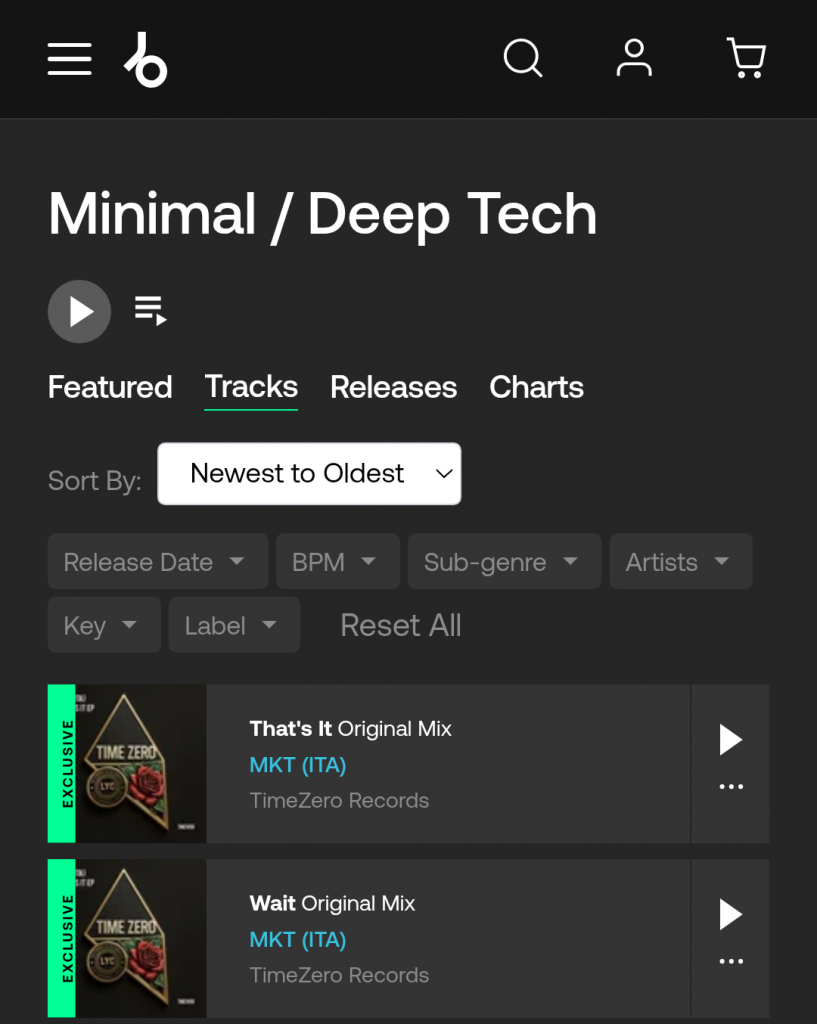
If you’re building a set around a particular tempo, you can search within a tight BPM window and surface tracks you would never have stumbled across otherwise. Combine that with a specific sub-genre and a date range, and you start carving out a very precise corner of the catalogue. It’s not a flawless system – metadata on Beatport can be inconsistent, and you’ll occasionally find tracks that don’t quite match what you searched for – but even with those imperfections, it’s a solid method for finding hidden gems that the algorithm won’t just hand to you.
Take a bit of time to experiment with different filter combinations. The same genre with a different sub-genre tag can return completely different results, and you’ll often find that less-hyped sub-genres have some of the most interesting music sitting quietly in the catalogue.
DJ Charts Are More Than a Playlist
DJ charts on Beatport are something a lot of people glance at without really digging in. But they’re worth spending real time with. When a DJ you respect puts together a chart, they’re essentially giving you a window into how they’re thinking about music right now – what they’re playing, what excites them, what fits together.
Don’t just stick to the DJs you already follow. Browse charts from artists whose work you’ve heard in passing, or from names you don’t recognise at all. You might find that someone whose music you’re not particularly into has impeccable taste in other people’s records.
When You Find a Track You Like, Follow the Thread
This is where the real digging starts. When you come across a track that catches your ear – whether through a chart, a search result, or just browsing – don’t stop there. Click on the artist name. See what else they’ve released. Explore their back catalogue, not just their recent output. Artists often have a run of releases that define a particular sound or era, and that body of work might be exactly what you’re looking for.
Then look at the label. Click through to the label page and see what else they’ve put out. Good labels tend to have a consistent aesthetic – if they released one track that resonated with you, there’s a strong chance other releases in their catalogue will too. Some of the best label-led discoveries happen this way, particularly with smaller independent labels that don’t have the marketing budget to push every release to the top of the charts.
This chain of clicks – track → artist → label → more releases — is essentially the digital version of flipping through crates. It takes a bit of patience, but that’s kind of the point.
The Bigger Picture
Beatport rewards the people who use it actively rather than passively. The Top 100 will always be there, and there’s nothing wrong with knowing what’s charting – but the DJs with the most interesting selections are usually the ones who go further. Advanced search, DJ charts, and following the thread from a single track can open up entire corners of the music world that the front page will never show you.
Next time you’re on the platform with half an hour to spare, skip the charts and try one of these approaches instead. You might be surprised what you find.